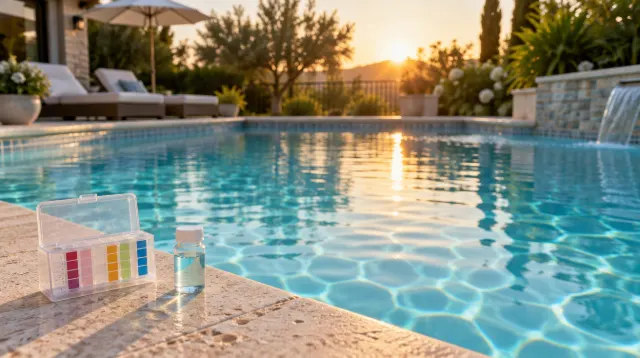
Pool Chemistry Basics: The Ideal Levels Chart
Ideal pool chemistry levels in one chart: pH, free chlorine, alkalinity, calcium, stabilizer and salt, plus what to adjust first and a volume calculator.

Topic
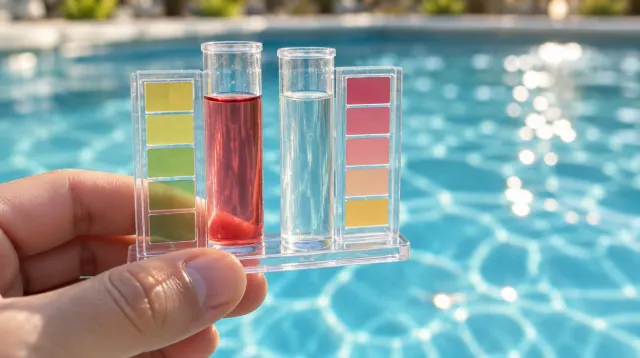
Test, balance and understand your water: pH, chlorine, alkalinity, calcium and stabilizer.
Ideal pool chemistry levels in one chart: pH, free chlorine, alkalinity, calcium, stabilizer and salt, plus what to adjust first and a volume calculator.
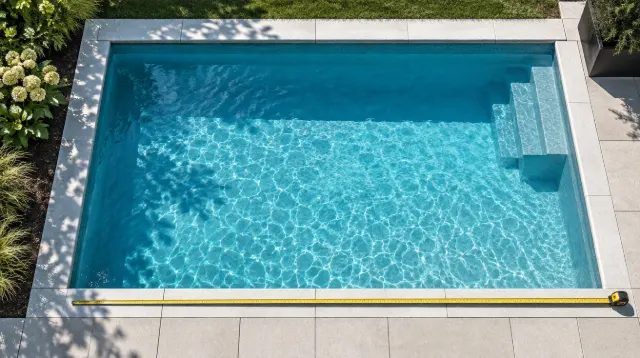
Work out how many gallons your pool holds in seconds. Free pool volume calculator for rectangle, round and oval pools, plus the formulas and measuring tips.
Why pool pH rises, how to lower it safely with muriatic acid or dry acid, how much to add, and how to stop it creeping back up. Step by step, with safety tips.
Low alkalinity makes pH bounce around and water corrosive. How to raise total alkalinity with baking soda, how much to add and how it differs from raising pH.
How much pool shock to add, based on your pool volume, stabilizer level and what you are fixing, with dosing examples for liquid chlorine, cal-hypo and dichlor.
What cyanuric acid does, the ideal stabilizer level for your pool, why too much makes chlorine weak, how to raise it and the only reliable way to lower it.
Free pool chemical calculator: how much liquid chlorine, cal-hypo, muriatic acid, soda ash, baking soda, stabilizer or calcium chloride to add for your volume.
How to raise low pool pH with soda ash, aeration or borax, which to choose based on alkalinity, how much to add, and why pH keeps dropping in the first place.
How to lower high total alkalinity in a pool with acid and aeration, how much acid it takes, how long it lasts, and how to stop alkalinity climbing back up.
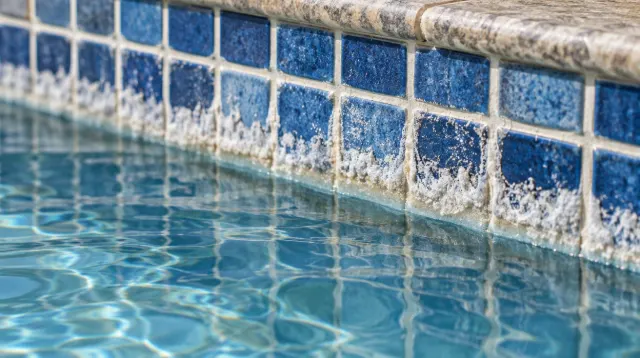
What calcium hardness does in a pool, the right range for plaster, vinyl and fiberglass, how to raise it with calcium chloride and how to lower it safely.