Pool Chemistry Basics: The Ideal Levels Chart
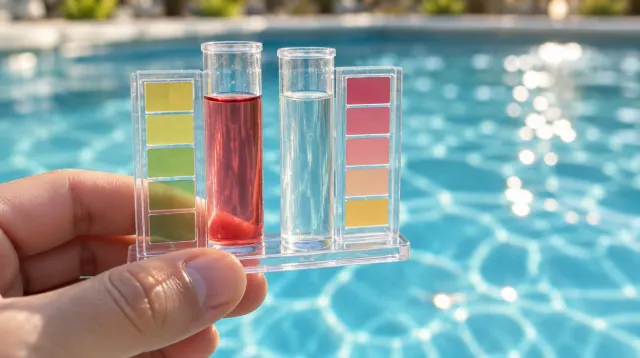
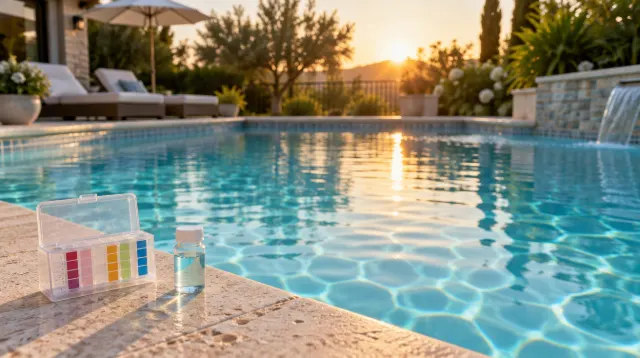
Ideal pool chemistry levels in one chart: pH, free chlorine, alkalinity, calcium, stabilizer and salt, plus what to adjust first and a volume calculator.

Low alkalinity makes pH bounce around and water corrosive. How to raise total alkalinity with baking soda, how much to add and how it differs from raising pH.
Total alkalinity is the quiet workhorse of pool chemistry. It buffers pH, soaking up the acids and bases that would otherwise send it swinging. When alkalinity is low, pH becomes unstable, water turns corrosive and your chlorine becomes harder to manage.
Total alkalinity measures how much alkaline material, mainly bicarbonates, is dissolved in the water. Think of it as pH’s shock absorber. The recommended range for most pools is 80–120 ppm. Our pool chemistry chart shows it alongside the other key readings.
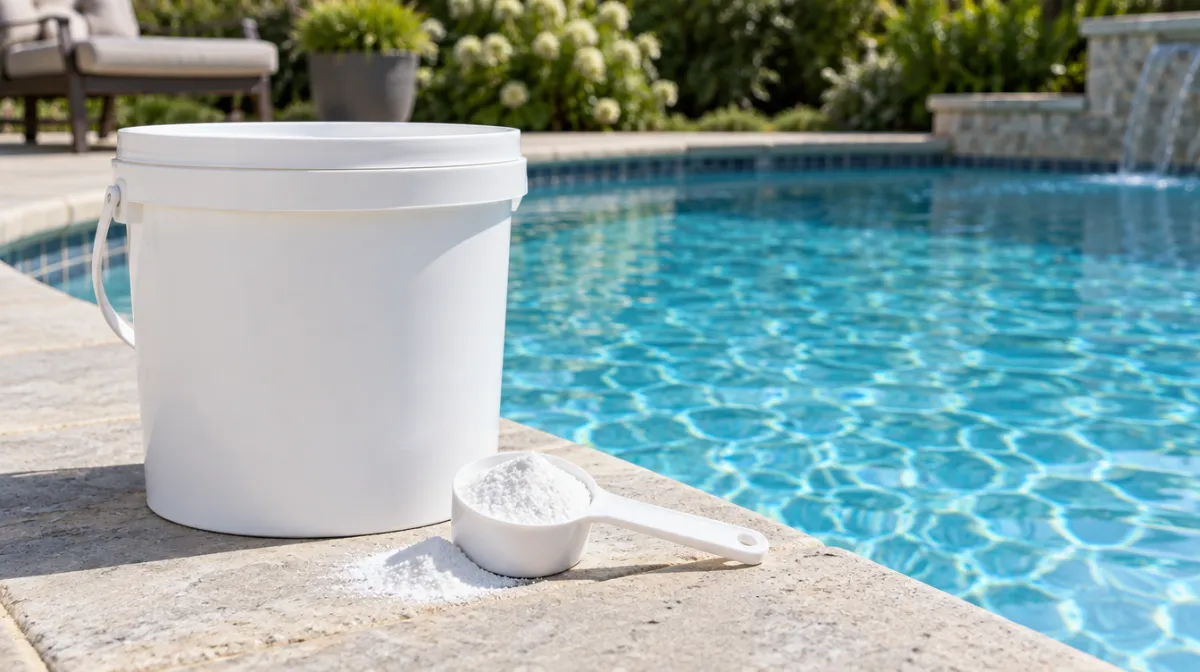
The standard product is sodium bicarbonate, sold as alkalinity increaser and chemically the same as baking soda.
Fix alkalinity first. Because it stabilises pH, getting alkalinity right makes pH adjustments stick. If pH is still low afterwards, see how to raise pH.
| Product | Main effect | Use it when |
|---|---|---|
| Sodium bicarbonate (baking soda) | Raises alkalinity a lot, pH slightly | Alkalinity is low |
| Sodium carbonate (soda ash) | Raises pH a lot, alkalinity somewhat | pH is low but alkalinity is fine |
| Aeration | Raises pH without raising alkalinity | pH is low and alkalinity is high |
Heavy rain, frequent acid additions, refilling with soft water and trichlor tablets, which are acidic, all pull alkalinity down over time.
High alkalinity makes pH drift upward and can cause cloudy water and scale. Lower it gradually with acid and aeration, as explained in our guide to lowering alkalinity; our pH guide covers acid safety.
Yes. Pool alkalinity increaser is sodium bicarbonate, the same compound as household baking soda, though pool products come in larger, more economical bags.
It dissolves quickly, but allow at least six hours of circulation before retesting.
It isn’t usually dangerous for a short time, but it can irritate eyes and skin and damage your pool over time. Correct it promptly.

Every article is edited by a human and checked against our editorial policy. Spotted a mistake? Tell us.
Ideal pool chemistry levels in one chart: pH, free chlorine, alkalinity, calcium, stabilizer and salt, plus what to adjust first and a volume calculator.
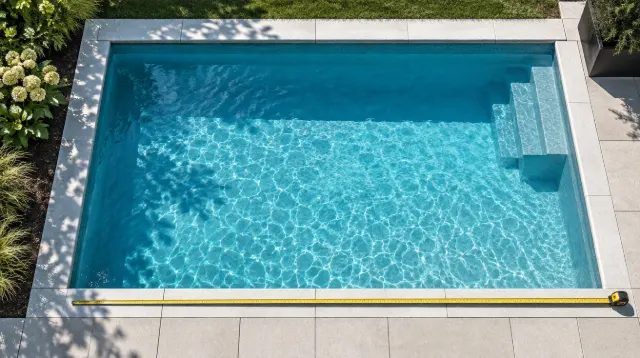
Work out how many gallons your pool holds in seconds. Free pool volume calculator for rectangle, round and oval pools, plus the formulas and measuring tips.
Why pool pH rises, how to lower it safely with muriatic acid or dry acid, how much to add, and how to stop it creeping back up. Step by step, with safety tips.