Pool Chemistry Basics: The Ideal Levels Chart
Ideal pool chemistry levels in one chart: pH, free chlorine, alkalinity, calcium, stabilizer and salt, plus what to adjust first and a volume calculator.

How to raise low pool pH with soda ash, aeration or borax, which to choose based on alkalinity, how much to add, and why pH keeps dropping in the first place.
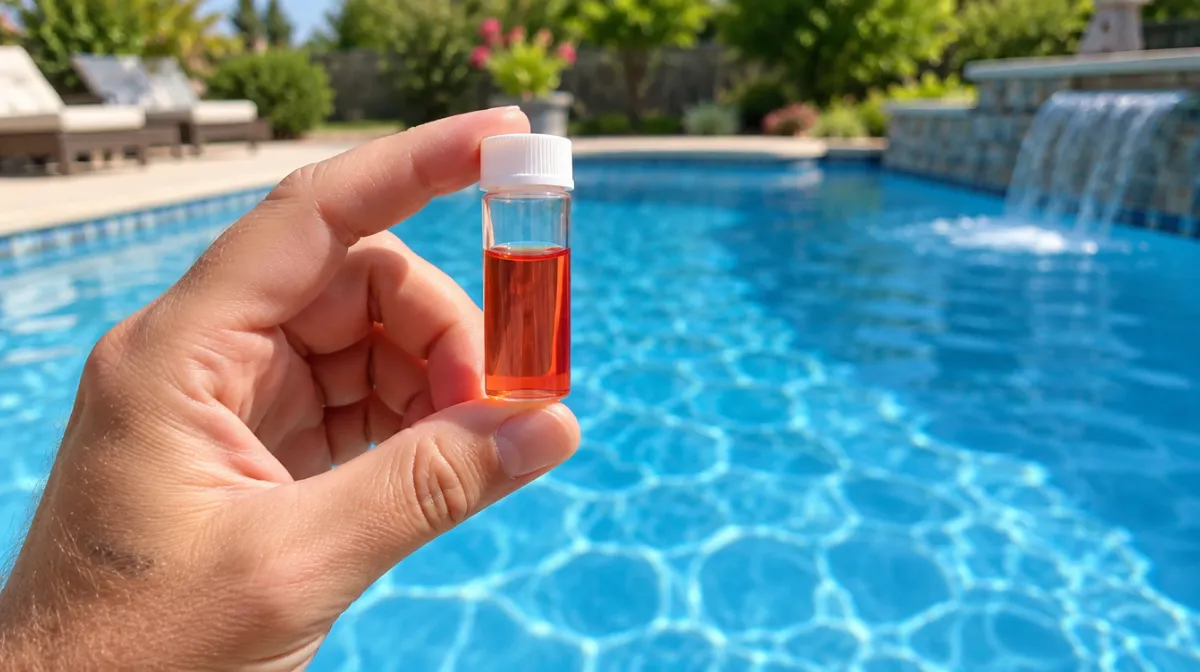
To raise pH in a pool, test total alkalinity first, then choose the right fix: soda ash (sodium carbonate) if alkalinity is normal, baking soda if alkalinity is also low, or aeration if alkalinity is already high. Add products in small doses with the pump running and retest after a few hours. Most pool owners aim for pH 7.4–7.6, and CDC recommends keeping it between 7.0 and 7.8.
pH measures how acidic or basic the water is. When it falls below about 7.2, water becomes aggressive:
Low pH also makes chlorine readings harder to interpret, and it tends to come with low alkalinity, which lets pH swing wildly.
| Your readings | Best fix | Why |
|---|---|---|
| pH low, alkalinity low (under about 80 ppm) | Baking soda first | Raises alkalinity a lot and pH a little; soda ash may not even be needed |
| pH low, alkalinity normal (80–120 ppm) | Soda ash | Raises pH quickly with a moderate rise in alkalinity |
| pH low, alkalinity high | Aeration | Raises pH without adding any alkalinity |
| pH low, want minimal alkalinity change | Borax (sodium tetraborate) | Raises pH with little effect on alkalinity; follow the label |
Our guide to raising total alkalinity covers the baking soda route in detail. If you use borax, add it slowly: it also adds borates, which buffer pH and make later acid doses a little larger.
Aeration drives dissolved carbon dioxide out of the water, which raises pH but leaves alkalinity unchanged. It’s slower than soda ash, but ideal when alkalinity is already high:
Expect pH to climb over a day or two. Retest each morning and stop aerating once pH reaches 7.4–7.6, or it will keep climbing. This same effect is why pH creeps up in pools with lots of water features.
If you raise pH and it drops again within days:
Above about 7.8, chlorine loses much of its strength, scale forms on tiles and heaters, and water can turn dull. If you go too far, our guide to lowering pH shows how to bring it back down gently. Small doses and patient retesting beat one big correction every time.
Yes, if alkalinity is also low. Baking soda raises alkalinity a lot and pH only a little. If alkalinity is already in range, soda ash is the better choice.
Follow the product label. Many labels allow swimming once the product has fully circulated and pH is back in range, but check yours.
A big dose raises pH sharply in one area, and calcium in the water can briefly come out as fine particles. Keep the pump running; the filter usually clears it within a day. Next time, split the dose.

Every article is edited by a human and checked against our editorial policy. Spotted a mistake? Tell us.
Ideal pool chemistry levels in one chart: pH, free chlorine, alkalinity, calcium, stabilizer and salt, plus what to adjust first and a volume calculator.
Work out how many gallons your pool holds in seconds. Free pool volume calculator for rectangle, round and oval pools, plus the formulas and measuring tips.
Why pool pH rises, how to lower it safely with muriatic acid or dry acid, how much to add, and how to stop it creeping back up. Step by step, with safety tips.