How to Winterize an Above-Ground Pool
How to close an above-ground pool for winter: balancing and shocking, lowering the water, protecting the plumbing, adding an air pillow and securing the cover.

A step-by-step checklist for opening your pool after winter: removing the cover, restarting equipment, balancing water, shocking and safety checks.
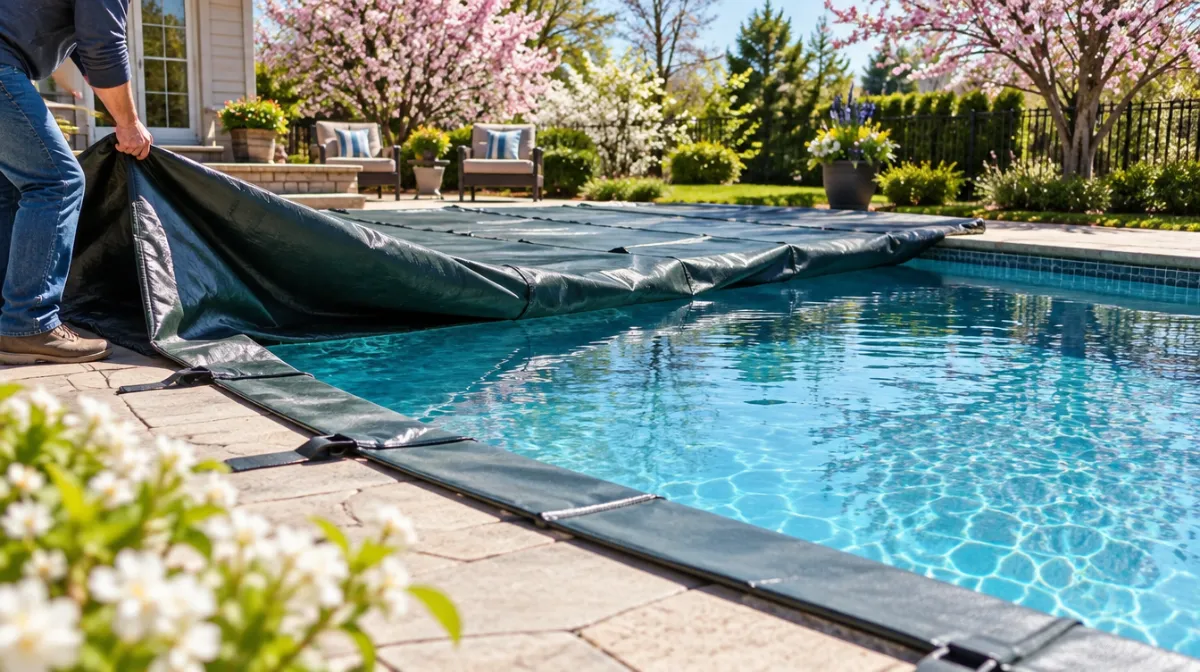
Opening your pool properly in spring saves you weeks of cloudy water and wasted chemicals. The order matters: equipment first, chemistry second, swimming last.
Pump standing water off the cover and brush off leaves and debris before removing it, so the mess stays out of the pool. Clean the cover, let it dry fully and store it folded somewhere dry.
Fill the pool to the middle of the skimmer opening.
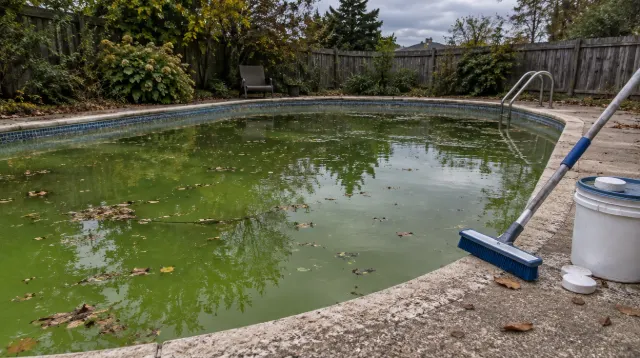
Skim floating debris, brush the walls and floor, and vacuum. If the water is green, go straight to our green pool guide.
Balance in this order, retesting between steps:
Our chemistry chart lists every target.
Opening is the classic time to shock. Use our guide to how much shock your pool needs, add it at dusk and run the pump overnight.
Run the pump continuously for 24–48 hours, cleaning the filter when pressure rises. Retest and adjust until the water is clear and balanced.
Read our full guide to pool safety for families.
The work takes a few hours; getting the water clear and balanced usually takes one to three days.
Many owners open when daytime temperatures consistently reach the high 60s°F (around 20°C). Opening early can stop algae getting a head start.
Balance alkalinity and pH first, then shock. Chlorine works best when pH is in range.

Every article is edited by a human and checked against our editorial policy. Spotted a mistake? Tell us.
How to close an above-ground pool for winter: balancing and shocking, lowering the water, protecting the plumbing, adding an air pillow and securing the cover.
Ideal pool chemistry levels in one chart: pH, free chlorine, alkalinity, calcium, stabilizer and salt, plus what to adjust first and a volume calculator.
Turn a green pool clear again: test, brush, shock to the right level for your stabilizer, run the filter and vacuum. Doses, timelines and mistakes to avoid.