How to Open a Pool for Summer: A Step-by-Step Checklist
A step-by-step checklist for opening your pool after winter: removing the cover, restarting equipment, balancing water, shocking and safety checks.

How to close an above-ground pool for winter: balancing and shocking, lowering the water, protecting the plumbing, adding an air pillow and securing the cover.
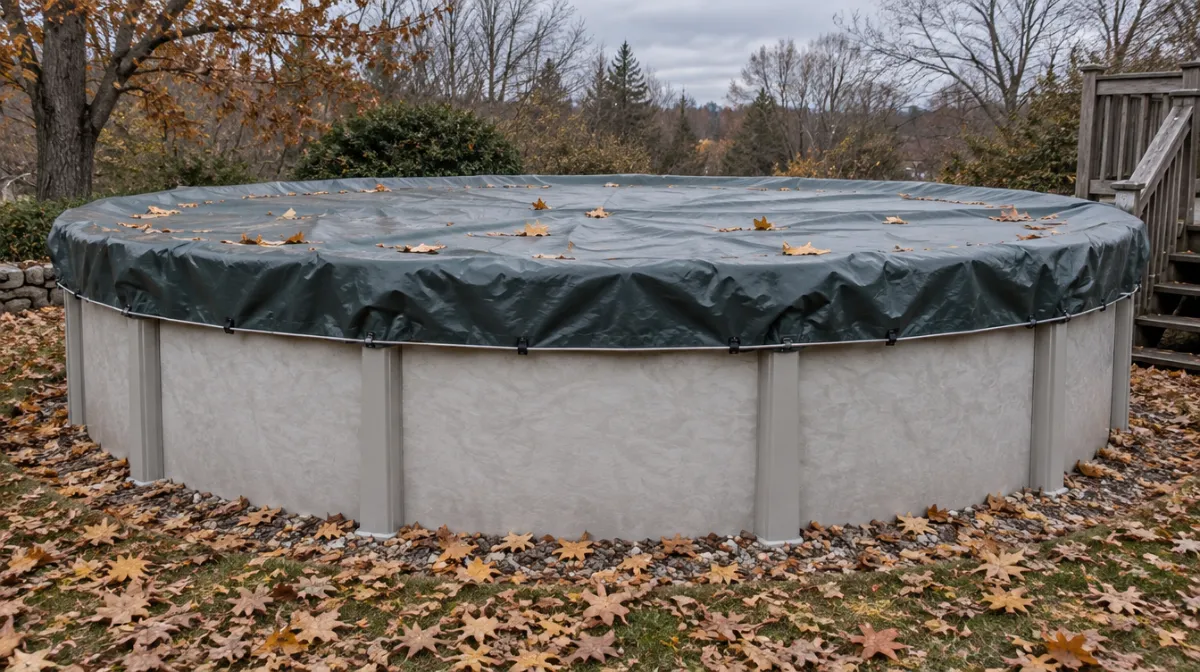
In cold climates, freezing water can crack pumps, split hoses and damage above-ground pool walls. Winterizing takes an afternoon and makes spring opening far easier.
Close the pool when water temperatures stay below about 65°F (18°C). Closing while the water is warm gives algae a head start under the cover.
Skim, brush and vacuum thoroughly. Anything left in the pool will feed algae through winter.
Bring alkalinity, pH and calcium into range using our chemistry chart. Balanced water protects the liner and equipment during the months it sits still.
Shock the pool a few days before closing and let chlorine fall back toward normal, so it doesn’t bleach the cover or liner. Our guide to how much shock your pool needs shows the dose. Some owners also add a winter algaecide.
Backwash a sand filter, or remove and clean cartridges. Store cartridges indoors.
Lower the water below the skimmer opening and return jet, following your pool maker’s guidance. Don’t drain the pool completely: above-ground pools need water to keep their shape.
Disconnect the hoses, drain the pump, filter and any heater or chlorinator, and store small equipment indoors. Heat pumps and gas heaters drain differently, so follow the manual; our pool heater comparison explains how the types differ. Plug the skimmer and returns.
Inflate an air pillow and tie it in the centre of the pool. It absorbs the pressure of expanding ice and helps rain and snow run off the cover.
Secure the winter cover with the cable and winch so wind can’t get underneath. Keep the cover clear of heavy snow and pooled water through winter.
When spring comes, our pool opening checklist takes you through the restart.
In climates where temperatures drop below freezing, yes. In mild climates, many owners run the pump less and keep the pool balanced instead.
Below the skimmer and return fittings, typically a few inches below the skimmer. Follow your manufacturer’s guidance.
Replace it if you can, or keep the cover clear of heavy water and snow until spring.

Every article is edited by a human and checked against our editorial policy. Spotted a mistake? Tell us.
A step-by-step checklist for opening your pool after winter: removing the cover, restarting equipment, balancing water, shocking and safety checks.
Ideal pool chemistry levels in one chart: pH, free chlorine, alkalinity, calcium, stabilizer and salt, plus what to adjust first and a volume calculator.
Turn a green pool clear again: test, brush, shock to the right level for your stabilizer, run the filter and vacuum. Doses, timelines and mistakes to avoid.