Saltwater vs Chlorine Pools: Costs, Pros and Cons
Saltwater or traditional chlorine? How salt chlorine generators work, upfront and running costs, maintenance, feel of the water, and which suits your pool.

Heat pump, gas or solar pool heater? How each works, running costs, heating speed, climate fit and sizing, plus why a pool cover is the cheapest upgrade of all.
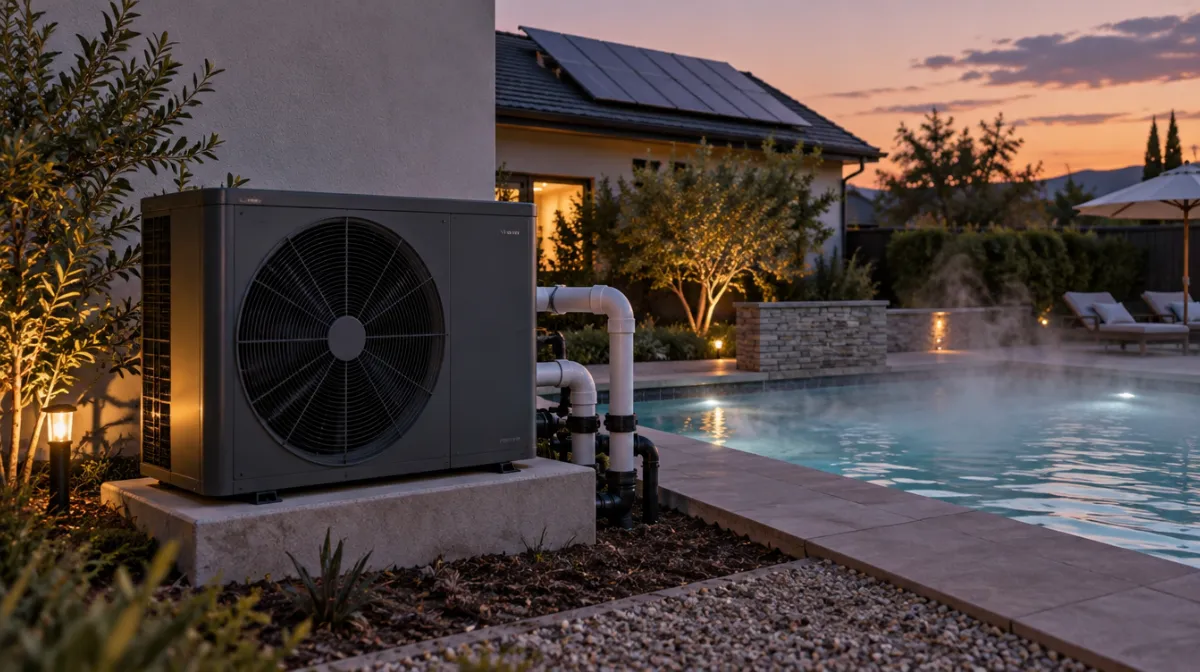
For most pools used through a long season, a heat pump is the best balance of running cost and comfort. A gas heater is the right choice if you want fast heat on demand, in any weather, or you only heat occasionally. Solar is the cheapest to run if you have sunshine and roof space. Whichever you choose, add a pool cover: the U.S. Department of Energy says covering a pool when it isn’t in use is the single most effective way to reduce pool heating costs, with savings of 50–70% possible.
| Heat pump | Gas | Solar | |
|---|---|---|---|
| Upfront cost | Medium to high | Low to medium | Medium to high |
| Running cost | Low | High | Very low |
| Heating speed | Slow to moderate | Fast | Slow; depends on sun |
| Works best | Air above about 50°F | Any weather | Sunny climates |
| Lifespan | Long | Shorter | Often the longest |
| On-site emissions | None | Combustion gases | None |
| Best for | Season-long heating | Spas, occasional use, cold snaps | Extending the season cheaply |
The efficiency of a heat pump pool heater is measured as its coefficient of performance (COP). The DOE says COPs usually range from 3.0 to 7.0, meaning 3 to 7 units of heat for every unit of electricity, measured under standard test conditions of 80°F air and 80°F water. Real-world COP falls as the air cools, and the DOE notes heat pumps lose efficiency below about 50°F.
Choose a heat pump if you swim most of the season, live somewhere with mild evenings and want low running costs. Expect it to take a day or more to raise the temperature of a cold pool, so most owners leave it on to maintain temperature rather than heating from cold each weekend.
Gas heaters are the sprinters: they raise water temperature quickly, even on a cold night. The DOE describes them as most efficient when used to heat pools for short periods, which makes them a good fit for spas, pools used mainly at weekends and cooler climates with a short season. The trade-off is fuel cost, which can be several times that of a heat pump for the same heat, depending on local gas and electricity prices. Gas heaters also need a gas line or propane tank and proper venting.
Solar systems cost little to run because the pool pump already circulates the water; you just pay for the extra pumping. The DOE describes solar pool heating as cost-competitive with other options in many climates. Collector area is usually a large fraction of the pool’s surface area, and more in cooler or cloudier places. Solar can’t heat on demand, so many owners pair it with a heat pump or gas heater for cloudy spells.
Sizing depends on the pool’s surface area, the temperature rise you want over the average air temperature and how windy the site is. The DOE gives a simple heat-pump sizing formula: pool area (sq ft) × temperature rise (°F) × 12 = Btu per hour needed, based on raising the water about 1–1¼°F per hour with light wind. An undersized heater runs for ever; an oversized one costs more to buy. Ask for a sizing calculation, not just a price.
Before winter, drain or protect your heater as its manual describes; trapped water can freeze and crack heat exchangers. Our guide to winterizing an above-ground pool covers the rest of the closing routine.
It can run in cool weather, but efficiency and output fall as the air gets colder, and many models struggle near freezing. In cold climates, a gas heater or a combined system works better for winter swimming.
Solar, if you have enough sun and collector space. Among heaters that work on demand, a heat pump is usually far cheaper to run than gas, depending on your local energy prices.
Yes, for almost every heated pool. It reduces evaporation, which is where most heat is lost, and the DOE puts potential heating savings at 50–70%.

Every article is edited by a human and checked against our editorial policy. Spotted a mistake? Tell us.
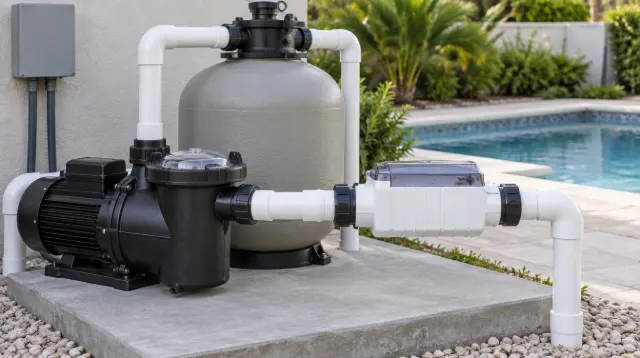
Saltwater or traditional chlorine? How salt chlorine generators work, upfront and running costs, maintenance, feel of the water, and which suits your pool.
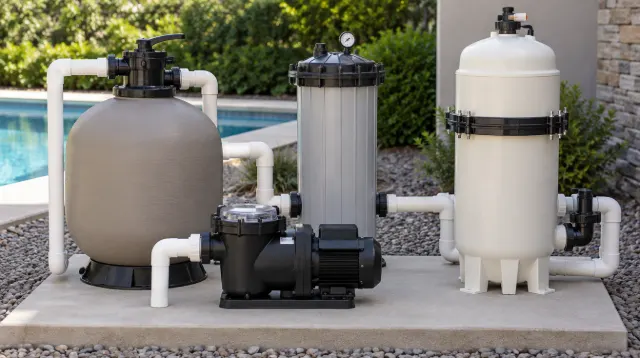
Sand, cartridge and DE pool filters compared: how fine they filter, cleaning, water use, cost and lifespan, plus how to tell when your filter needs attention.
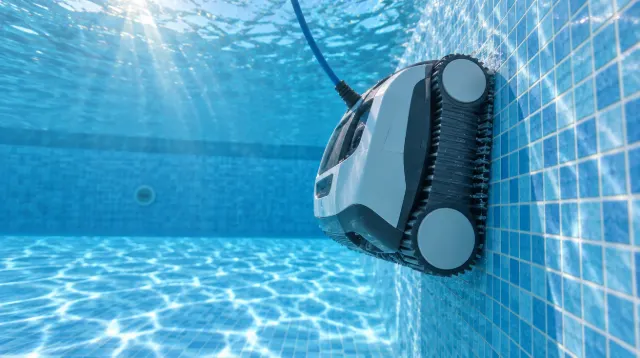
What to look for in a robotic pool cleaner: wall and waterline cleaning, filtration, navigation, cable or cordless, maintenance and warranty.