How to Fix a Green Pool: A Step-by-Step Guide
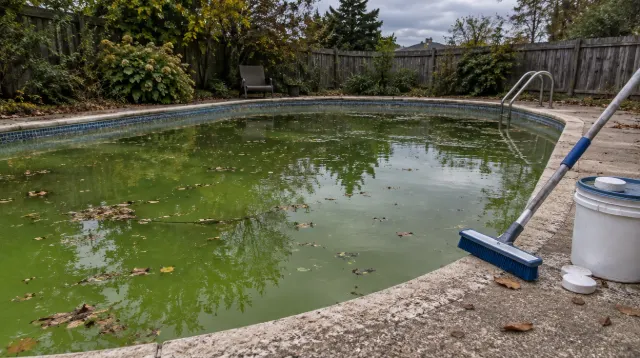
Turn a green pool clear again: test, brush, shock to the right level for your stabilizer, run the filter and vacuum. Doses, timelines and mistakes to avoid.

Yellow, dusty patches that brush away and come back? How to identify and kill mustard algae, clean everything it touches and stop it returning.
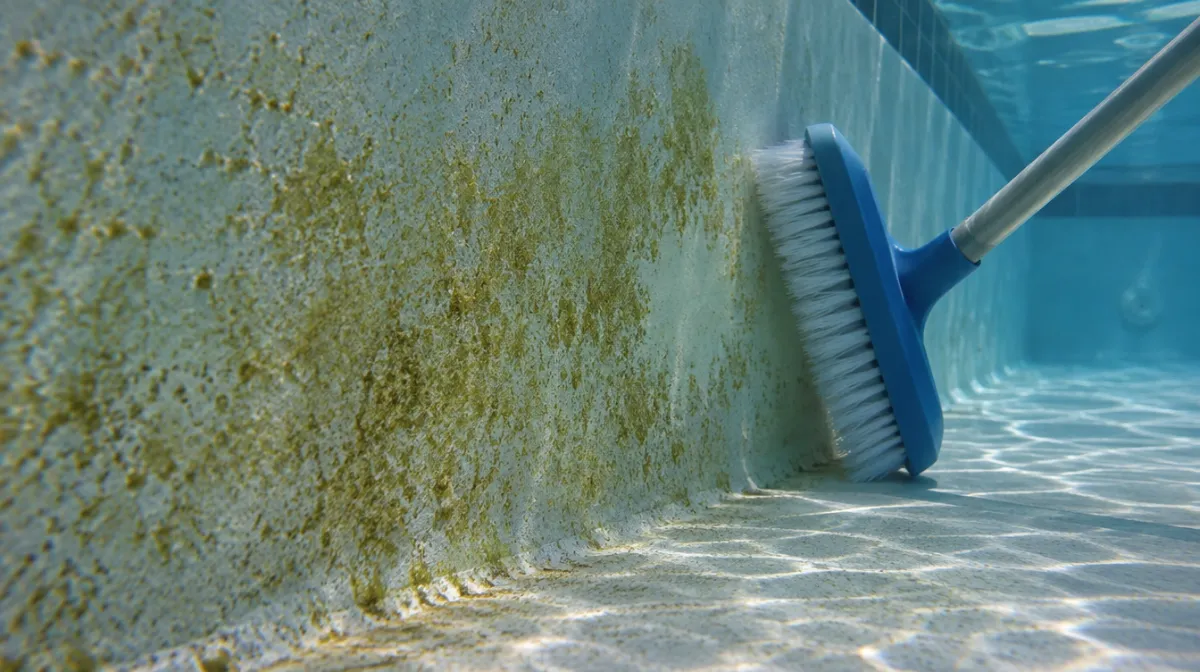
Mustard algae, sometimes called yellow algae, is the stubborn cousin of green algae. It clings to shaded walls, looks like yellow sand or pollen and brushes away easily, only to return a few days later. Dark blue-black spots that barely brush off are a different problem: see our guide to black algae. The key is killing it everywhere it hides, not just where you can see it.
Pollen and dirt can look similar, but they don’t keep coming back to the same spots.
Test free chlorine, pH and stabilizer. Lower pH to about 7.2–7.4 so chlorine works at full strength; see lowering pool pH.
Brush all walls, steps, corners and behind ladders thoroughly. Mustard algae protects itself with a coating that chlorine struggles to penetrate.
Raise free chlorine to about 40% of your stabilizer level and hold it there, testing and topping up several times a day. Our shock dosing guide shows how much to add.
Run the pump around the clock and clean or backwash the filter often, as dead algae collects there. Our filter guide covers each type.
Mustard algae can survive on swimsuits, toys, floats, brushes and vacuum heads, then reinfect the pool. Wash swimsuits, and soak toys and tools in a strong chlorine solution before rinsing.
Keep holding the shock level until the water is clear, combined chlorine is 0.5 ppm or lower and free chlorine drops by no more than 1 ppm overnight. The same test is explained in our green pool guide.
It isn’t usually harmful to touch, but algae can harbour bacteria and hide swimmers in cloudy water. Treat it before swimming.
Some products target mustard algae, but a thorough brush-and-hold chlorine treatment is the essential part.
Often several days of holding shock-level chlorine. Don’t stop early.

Every article is edited by a human and checked against our editorial policy. Spotted a mistake? Tell us.
Turn a green pool clear again: test, brush, shock to the right level for your stabilizer, run the filter and vacuum. Doses, timelines and mistakes to avoid.
Why pool water turns cloudy and how to clear it: low chlorine, high pH or alkalinity, poor filtration, high calcium, early algae and debris, with fixes.
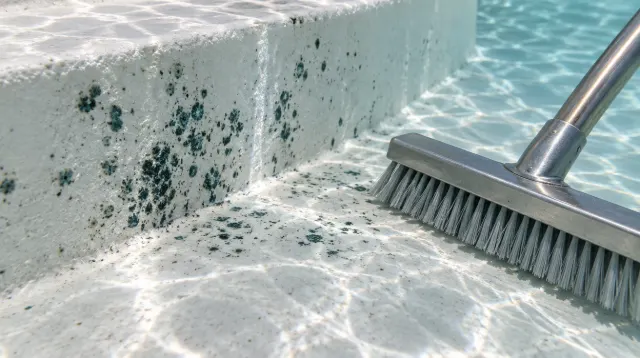
How to identify and kill black algae: hard brushing, spot treatment, shocking to the right level, filter cleaning and how to stop the spots coming back.