How to Fix a Green Pool: A Step-by-Step Guide
Turn a green pool clear again: test, brush, shock to the right level for your stabilizer, run the filter and vacuum. Doses, timelines and mistakes to avoid.

Why pool water turns cloudy and how to clear it: low chlorine, high pH or alkalinity, poor filtration, high calcium, early algae and debris, with fixes.
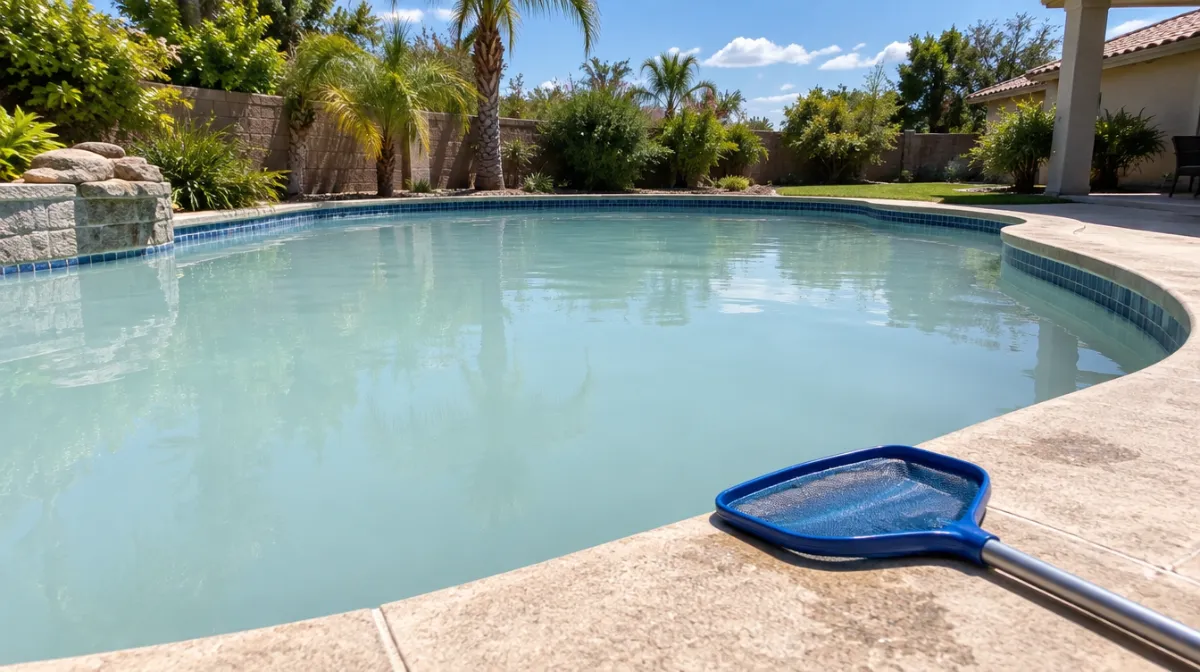
Cloudy water is your pool’s warning light. It usually appears before algae takes hold, and it always means something is off, either in the chemistry or the filtration. The good news: most cloudy pools clear in a day or two once you find the cause.
Test free chlorine, combined chlorine, pH, total alkalinity, calcium hardness and cyanuric acid. The results usually point straight at the problem. Our pool chemistry chart shows the target ranges.
Without enough sanitizer, bacteria and fine organic particles build up and the water turns milky. Raise free chlorine to the right level for your stabilizer, and shock if combined chlorine is above 0.5 ppm. See how much shock your pool needs.
When pH or alkalinity is high, calcium can drop out of solution as fine particles, clouding the water. Bring pH back to 7.4–7.6; our guide to lowering pool pH walks through it.
Very hard water, especially combined with high pH, forms cloudy calcium scale. Partial draining and refilling with softer water is often the only lasting fix.
A dirty filter, a pump that doesn’t run long enough or a clogged skimmer basket all let particles build up. Clean or backwash the filter and run the pump longer until the water clears.
Cloudy water with a slight green or yellow tint and slippery walls often means algae is starting. Brush thoroughly and shock. If it has already turned green, follow our green pool guide.
Pollen, dust, heavy rain and lots of swimmers all add fine particles. Skim, vacuum and keep the filter running.
Too much stabilizer makes chlorine sluggish, so contaminants linger. The fix is partial draining; see our guide to cyanuric acid.
| Product | How it works | Best for |
|---|---|---|
| Clarifier | Clumps tiny particles so the filter can catch them | Mildly cloudy water |
| Flocculant | Makes particles sink to the floor for vacuuming to waste | Very cloudy water, fast results |
Only use these after fixing the chemistry, or the cloudiness will return.
With balanced chemistry and a clean filter running around the clock, most pools clear in 24–72 hours.
No, not if the water is too cloudy to see the bottom clearly. Clear it first.
Shocking kills contaminants, which can leave the water temporarily hazy. Keep the filter running and clean it often; it should clear within a day or two.
Yes. Rain dilutes chlorine, can shift pH and washes in dirt and debris. Test and rebalance after heavy rain.

Every article is edited by a human and checked against our editorial policy. Spotted a mistake? Tell us.
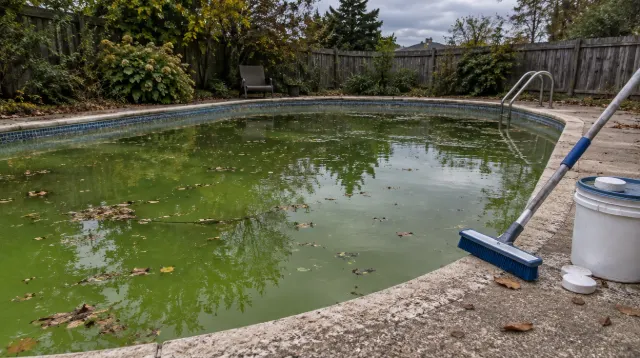
Turn a green pool clear again: test, brush, shock to the right level for your stabilizer, run the filter and vacuum. Doses, timelines and mistakes to avoid.
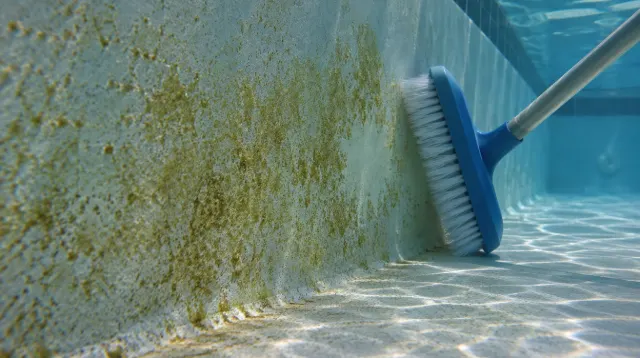
Yellow, dusty patches that brush away and come back? How to identify and kill mustard algae, clean everything it touches and stop it returning.
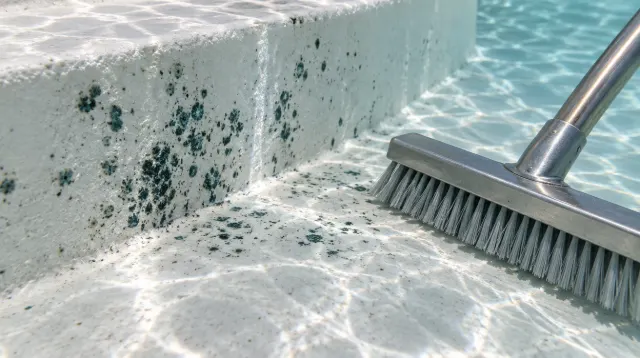
How to identify and kill black algae: hard brushing, spot treatment, shocking to the right level, filter cleaning and how to stop the spots coming back.