Pool Chemistry Basics: The Ideal Levels Chart
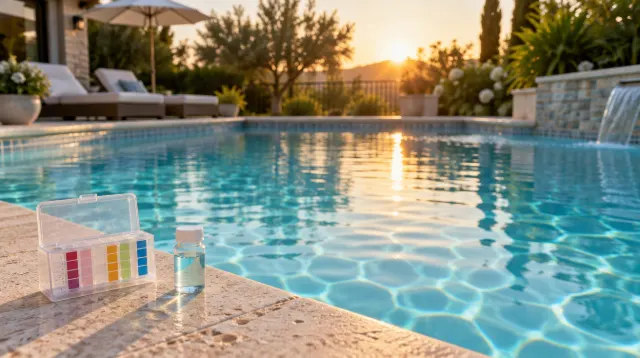
Ideal pool chemistry levels in one chart: pH, free chlorine, alkalinity, calcium, stabilizer and salt, plus what to adjust first and a volume calculator.

Hot tub water care: target chlorine or bromine and pH levels, a weekly routine, shocking, when to drain and refill, and how to fix cloudy or foamy water.
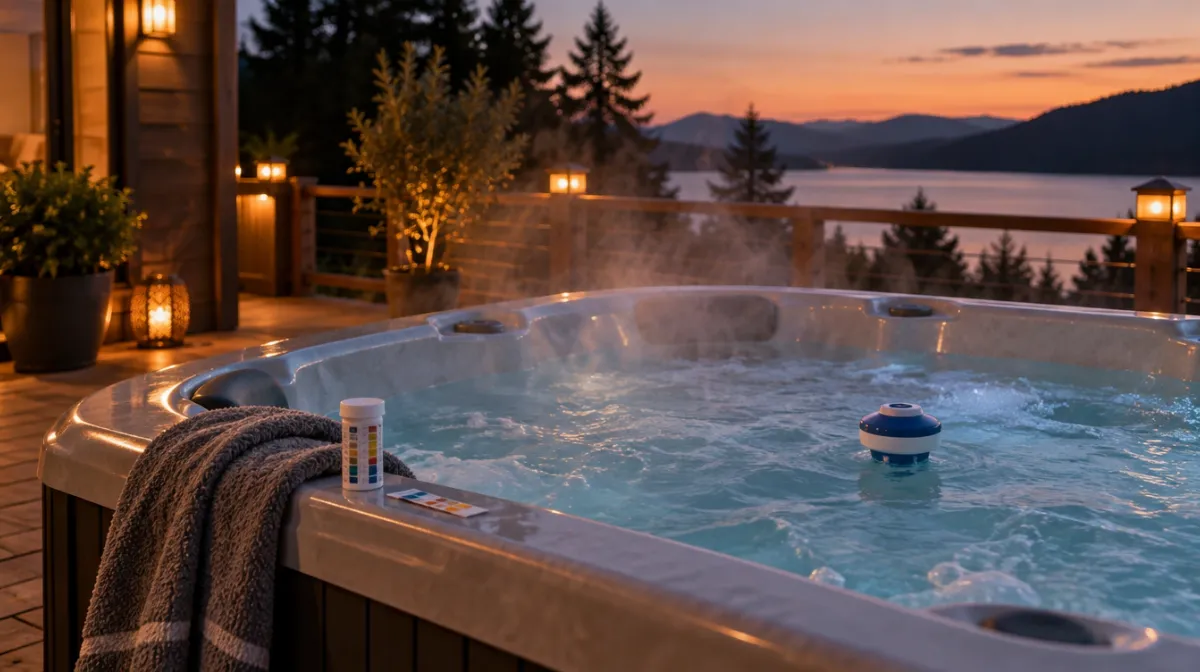
Hot tub chemistry comes down to three habits: keep a steady sanitizer level, keep pH in range and change the water regularly. CDC recommends at least 3 ppm free chlorine in hot tubs and a pH of 7.0 to 7.8; if you use bromine, public hot tubs are held at 4–8 ppm. Test often, add sanitizer after each soak, shock weekly and drain and refill every few months.
A hot tub holds a few hundred gallons, not tens of thousands, so each bather has a much bigger effect on the water. Heat speeds up chemical reactions, jets drive off sanitizer and carbon dioxide, and warm water suits germs. CDC’s Legionella guidance notes that hot tubs operate within the favorable growth range for Legionella (77–113°F), and low disinfectant levels also allow Pseudomonas, which can cause skin rashes. Good chemistry is what keeps a hot tub safe. A well-fitting cover helps too: it keeps heat in, debris out and sunlight off the water, so sanitizer lasts longer.
| Reading | Target | Notes |
|---|---|---|
| Free chlorine | At least 3 ppm | CDC minimum for hot tubs; public hot tubs run 3–10 ppm |
| Bromine | 4–8 ppm | The range CDC gives for public hot tubs |
| pH | 7.0–7.8 | Many owners aim for 7.4–7.6 |
| Total alkalinity | About 80–120 ppm | Some owners run lower to slow pH rise |
| Calcium hardness | About 150–250 ppm | Follow your manufacturer’s range |
| Stabilizer (CYA) | None | CDC recommends not using cyanuric acid in hot tubs |
| Temperature | No higher than 104°F | Higher risks overheating and scalding |
For comparison with pool levels, see our pool chemistry chart.
Either works if you keep the level steady. Don’t switch back and forth without draining first.
Before each soak (or at least two or three times a week): test sanitizer and pH, and adjust.
After each soak: add sanitizer to replace what the bathers used, and put the cover back on.
Weekly: shock the water with a chlorine shock or a non-chlorine oxidizer (MPS), rinse the filter and check alkalinity. Our guide to shocking explains what shock does.
Monthly: deep-clean the filter as your manual directs and check calcium hardness.
Every few months: drain, clean and refill. CDC’s Legionella toolkit gives a water-replacement formula: days between changes = (spa volume in gallons ÷ 3) ÷ average number of users per day. For a 400-gallon tub used by two people a day, that’s about 67 days. Before draining, some manufacturers recommend a plumbing flush product to clear biofilm from the pipes; follow your manual.
Use CDC’s formula: spa volume in gallons ÷ 3 ÷ average daily users. For most home tubs that works out at every two to four months, and sooner if the water won’t stay clear.
Many are the same compounds, but doses must be tiny, and some pool products, like trichlor tablets, are unsuitable. Use products labelled for spas where you can.
A sharp chlorine smell usually means combined chlorine (chloramines), a sign the sanitizer is being used up. Shocking breaks them down.

Every article is edited by a human and checked against our editorial policy. Spotted a mistake? Tell us.
Ideal pool chemistry levels in one chart: pH, free chlorine, alkalinity, calcium, stabilizer and salt, plus what to adjust first and a volume calculator.
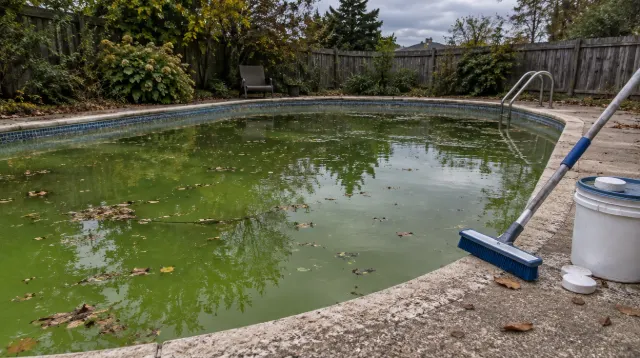
Turn a green pool clear again: test, brush, shock to the right level for your stabilizer, run the filter and vacuum. Doses, timelines and mistakes to avoid.
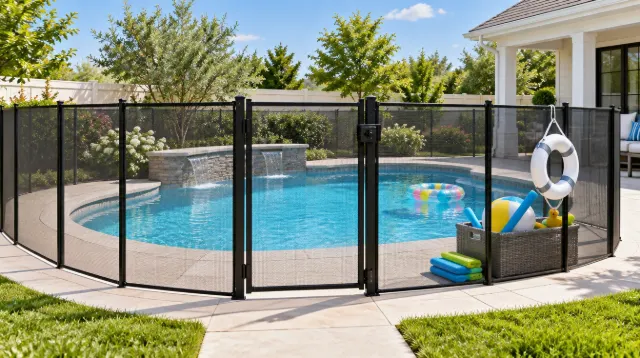
Drowning is fast and silent. The layers that protect children at home pools: four-sided fencing, alarms, water watchers, swim lessons, CPR and safe drains.